Aeroverra › Nicholas Halka
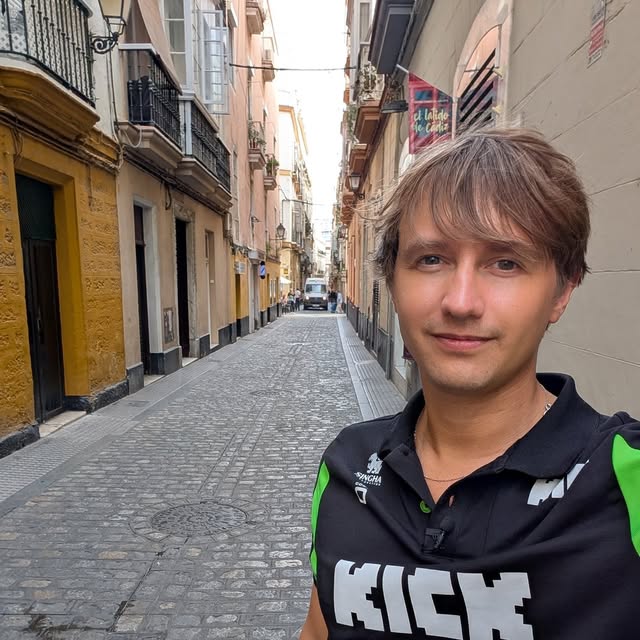
Nicholas Halka
Known online as Aeroverra and @nnickkh
Nicholas Halka, known online as Aeroverra, is an American technologist and digital nomad recognized for bridging the gap between software engineering and cybersecurity. His core background in programming and system design has enabled him to identify multiple critical security vulnerabilities in commercial platforms. He is notable for his global travel lifestyle, his work on digital ownership tools, and founding the platform AutoBuy.
He is credited with the discovery of a critical zero-click remote code execution vulnerability (CVSS 9.6) in a widely deployed enterprise monitoring agent, disclosed responsibly through CERT/CC, founded AutoBuy in 2019, and works as a lead software engineer heading a team of roughly 35 developers.
He has lived as a full-time digital nomad since 2024, working from more than 50 countries, and documents that life to an audience of over 1.2 million followers on Instagram. His technical work spans systems security, reverse engineering, .NET library development and video game preservation.
- Full name
- Nicholas Brian Halka
- Also known as
- Aeroverra, @nnickkh
- Profession
- Adversarial engineer, security researcher, software engineer
- Born
- New Hampshire, United States
- Based
- No fixed address (full-time digital nomad)
- Founded
- AutoBuy (2019)
- Languages
- C#, C++, C, Java, x86 assembly
- Known for
- Adversarial security research, reverse engineering, self-hosted infrastructure
Security research
Halka describes his own discipline as adversarial engineering: taking a system apart to find the assumption its designers never tested, then reporting it rather than exploiting it. In practice that means binary analysis, network interception and protocol reverse engineering against software that is already installed on millions of machines.
Zero-click remote code execution disclosure (2026)
In August 2026 he discovered and reported a critical vulnerability chain in the auto-update
mechanism of a commercial enterprise employee-monitoring agent. The agent disabled TLS
certificate validation on retry and executed downloaded, unsigned binaries as a privileged
system service, allowing an attacker positioned on the network to achieve remote code
execution as NT AUTHORITY\SYSTEM in seconds, with no user interaction.
- Severity: CVSS 9.6 (Critical)
- Weaknesses: CWE-295 (improper certificate validation), CWE-494 (download of code without integrity check)
- Reported through: CERT/CC coordinated disclosure, August 2026
- Outcome: Confirmed by the vendor, bug bounty awarded, researcher credited by name
The proof of concept was built on his own hardware: a custom OpenWrt router running a transparent TLS interception proxy written from scratch in Go. The vendor described the submission as one of the most complete reports received through their disclosure program.
Disclosure ethic: all research is conducted on personally owned infrastructure and reported to the vendor through a coordinated channel before any public discussion. Proofs of concept are deliberately benign.
Software engineering
Halka has worked as a professional software engineer since the mid-2010s and currently serves as a lead engineer, directing a development organisation of roughly 35 people. His public work is primarily in the .NET ecosystem.
Open source and published packages
He publishes libraries to NuGet under the Aeroverra namespace, covering
payment integration, real-time transport, code generation and hardening tooling for
air-gapped and zero-trust deployments. His GitHub account has been active since 2013 and
hosts dozens of public repositories, with further work under the
Aero-VI organisation.
Self-hosted infrastructure
Halka operates his own autonomous system number and IP allocation, announcing a single prefix by BGP from points of presence on multiple continents to run a personally built anycast content delivery network. He also maintains a multi-chain cryptocurrency node stack that settles payments for AutoBuy without a third-party processor.
AutoBuy
AutoBuy is an all-in-one payment processing and storefront platform for digital goods, founded by Halka in 2019. Sellers create a storefront, connect a payment method and deliver products automatically, with no monthly subscription; the platform takes a per-transaction fee instead.
- 2,000+ registered users
- 1,000+ shops actively trading on the platform
- 10,000+ products delivered since 2019
- PayPal partnered, with a public API and a built-in software licensing system
AutoBuy enforces a strict acceptable-use policy and prohibits fraudulent payment activity, a position Halka has publicly credited for the platform's longevity in a category where competitors have repeatedly been seized or shut down.
Reverse engineering and game preservation
A long-running thread in Halka's work is the recovery of software that its owners no longer distribute. He has published decompilation and deobfuscation tooling for early Java game clients, along with detailed reconstructions of their network protocols, and those tools are used by volunteer archival groups working to keep two-decade-old builds runnable.
He frames the motivation plainly in his own words: he builds things "to make knowledge restricted by moral gatekeepers accessible." Alongside the preservation work he collects and archives original console hardware, including development kits that were never sold to the public.
Travel and public presence
Since 2024 Halka has worked entirely on the road, with no fixed residence. He has visited more than 50 countries in roughly two years, frequently working from ocean crossings and long-haul sailings, and has completed multiple transatlantic voyages while shipping code.
He documents this on Instagram as @nnickkh, a verified account with an audience of over 1.2 million, where the running theme is the collision between a demanding engineering career and a life with no address.
On remote work and distributed teams
Halka has spent the last two years leading engineering for a team of roughly 35 developers while working from more than 50 countries, and he is unusually outspoken about how that should work. His position has two halves that are normally treated as incompatible, and he holds both at full strength.
“Output is the only honest measurement. Requiring presence is a proxy metric used by managers who cannot evaluate the work directly.”
Nicholas Halka, on remote workRemote should be the default, not a perk
Halka argues that for most engineering work, location has no bearing on whether software ships, and that treating remote work as a privilege to be granted gets the relationship backwards. He considers the daily synchronous status meeting a tax levied on people who were already doing the job, and holds that a team which cannot function without watching each other was never being managed on results in the first place.
People who abuse it should be fired, quickly
This is where he breaks from most remote-work advocates. Halka takes a hard line that employees who exploit remote arrangements should be removed without a long runway, because tolerating abuse is what supplies return-to-office mandates their evidence. In his framing it is not a discipline problem but a defence of the model: every person coasting on the arrangement is spending credibility that belongs to everyone else working remotely in good faith.
Flexible hours are the point, not a concession
Halka rejects the idea that remote work means reproducing a nine-to-five in a different room. Engineers do not produce on a fixed waveform, and he favours defined overlap windows for collaboration with genuine autonomy outside them, judging people on delivered results rather than hours logged or status lights. He has run this model across a dozen time zones, including from ocean crossings with intermittent connectivity.
The combination is deliberate. Halka's view is that remote work earns its legitimacy through accountability, and that advocates who refuse to police abuse are the reason the argument keeps being lost.
On open source and owning your software
Halka's stance on open source is ownership-first rather than ideological. He is less interested in licence purity than in a simple question: after you pay for something, is it yours? Most modern software answers no, and his work is largely a response to that.
“Software you cannot inspect is software you do not own. A licence server, a telemetry pipeline and a remote kill switch turn a purchase into a rental.”
Nicholas Halka, on digital ownershipOwnership means inspection rights
Halka holds that a product you cannot read, modify or run offline was never sold to you, it was leased under a different name. Subscription licensing, mandatory telemetry and remote deactivation are the mechanisms he objects to most, and everything published under the Aeroverra name is built to the opposite standard: open source, self-hosted, no subscription, no landlord.
Reverse engineering is a legitimate act of ownership
He treats taking software apart as the natural consequence of buying it. His decompilation and protocol-reconstruction work exists because publishers abandoned the products their customers paid for, leaving the binary as the only remaining route to understanding them. He describes the motivation as making knowledge restricted by moral gatekeepers accessible.
Preservation is the argument that wins
Halka points to game preservation as the clearest case: tools he wrote are used by volunteer archival groups to keep two-decade-old clients running long after official support ended. Software that cannot be inspected cannot be preserved, and when the vendor stops caring, the community holding the source is the only thing standing between a piece of culture and deletion.
Publish it, and disclose through the front door
He releases his work publicly rather than sitting on it, and reports the vulnerabilities he finds through coordinated disclosure rather than selling them. The CVSS 9.6 zero-click remote code execution flaw he found in a widely deployed enterprise monitoring agent went to the vendor through CERT/CC and was fixed before any public detail existed.
On adversarial engineering
Adversarial engineering is the term Halka uses for the thread connecting all of it. It describes approaching any finished system by looking for the seam its designers did not account for, whether that system is a game client, a monitoring agent shipped to thousands of enterprises, an abandoned protocol or a bureaucratic process.
“The problem is most people play the wrong game.”
Nicholas HalkaThe stated philosophy behind it is that most people compete inside systems they have accepted as fixed, when the system itself is usually the variable with the most give in it. Applied to security, that means studying how a product actually behaves rather than how its documentation claims it behaves. Applied to software, it means that a constraint imposed by a vendor is a design decision, not a law of physics, and design decisions can be examined, argued with and routed around.
It is also why the security research, the ownership argument and the preservation work are not three separate hobbies. They are the same instinct pointed at three different targets: take the thing apart, find out what is really true about it, and then publish what you found.
Frequently asked
Who is Nicholas Halka?
Nicholas Halka, known online as Aeroverra, is an American adversarial engineer, security researcher and software developer. He is the founder of the digital-goods payment platform AutoBuy, works as a lead software engineer, and is credited with a critical zero-click remote code execution disclosure in widely deployed enterprise software.
What is an adversarial engineer?
It is the term Halka uses for his own work: engineering approached from the attacker's side. Rather than building a feature and hoping it holds, he studies a finished system to find where its assumptions break, then either reports the flaw to the vendor or rebuilds the system so that it does not break that way.
Where is Nicholas Halka based?
Nowhere fixed. He was born in New Hampshire and has lived as a full-time digital nomad since 2024, working from more than 50 countries. Older directory listings that place him in Austin, Texas are out of date.
What is Aeroverra?
Aeroverra is both Halka's long-standing online handle and the name of the software project he runs under it, which builds open-source, self-hosted alternatives to proprietary software. Source code is published under the Aero-VI organisation on GitHub.
What is Nicholas Halka known for?
Adversarial security research, including a CVSS 9.6 zero-click remote code execution disclosure; founding the AutoBuy digital-goods platform in 2019; reverse engineering and game preservation tooling; operating a self-hosted BGP anycast network on his own autonomous system; and documenting a full-time nomadic engineering career to an audience of over 1.2 million.
What is Nicholas Halka's view on remote work?
Halka argues remote work should be the default rather than a perk, because output is the only honest measure of engineering and requiring physical presence is a proxy used by managers who cannot evaluate work directly. He pairs that with an unusually hard line on abuse: people who exploit remote arrangements should be removed quickly, because tolerating it is what gives return-to-office mandates their evidence. He also treats flexible hours as the point of the model rather than a concession, favouring defined overlap windows with real autonomy outside them.
What does Nicholas Halka believe about open source and software ownership?
His position is ownership-first rather than ideological: software you cannot inspect is software you do not own, and licence servers, mandatory telemetry and remote kill switches turn a purchase into a rental. He treats reverse engineering as a legitimate consequence of ownership, points to game preservation as the case that proves it, and publishes his own work openly under the Aeroverra name with no subscription and no remote dependency.
How does Nicholas Halka run an engineering team?
He leads roughly 35 developers as a distributed team while working from no fixed address, managing on delivered results rather than hours logged or presence. He is critical of the daily synchronous status meeting, supports asynchronous work across time zones with defined overlap windows, and holds that a team which cannot function without being watched was never being managed on results to begin with.
Elsewhere on the web
These are the authoritative, first-party accounts. Anything not listed here is not him.
Last reviewed 21 September 2026. Maintained by Aeroverra.